
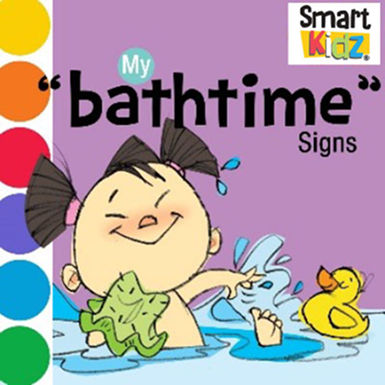
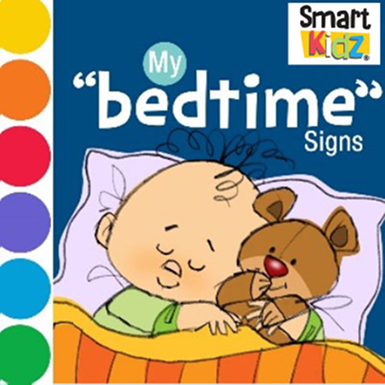
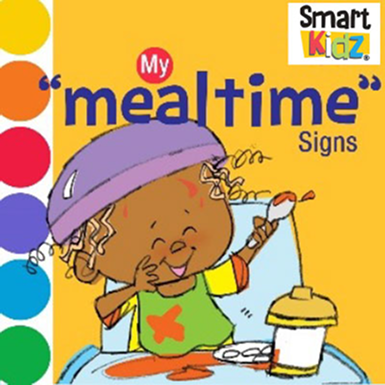
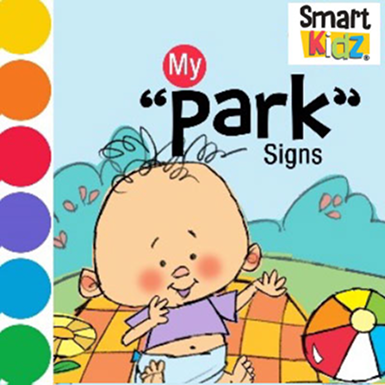
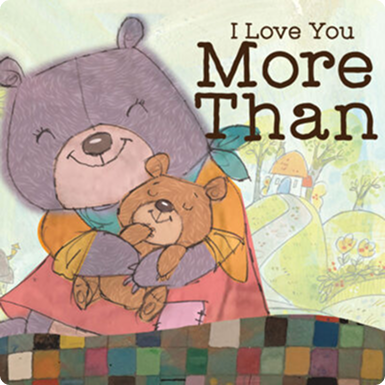
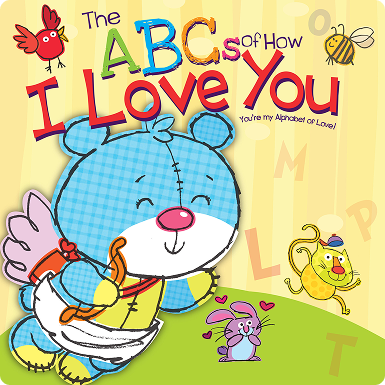
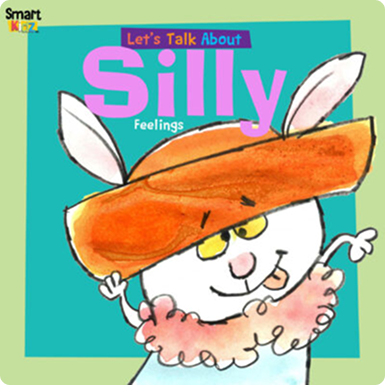
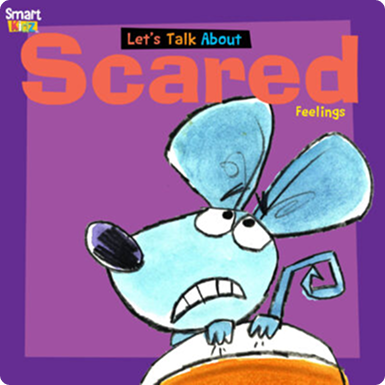
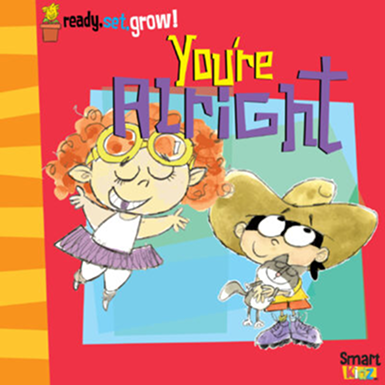
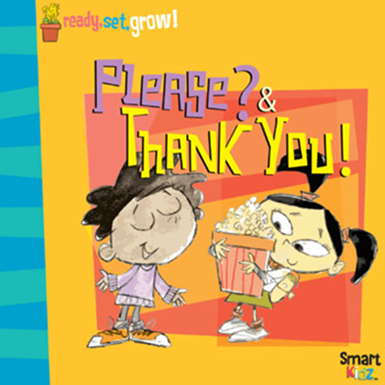

The Baby Signs, Say & Play Program is based on over two decades of research, much of it funded by the National Institutes of Health, by Dr. Linda Acredolo and Dr. Susan Goodwyn at the University of California Davis. The research proves that encouraging pre-verbal babies to communicate via the simple, non-verbal signs featured in the Baby Signs, Say & Play Program significantly decreases frustration, improves the parent/child bond, facilitates learning to talk, promotes literacy, and leads to increased IQs in elementary school.
The Baby Signs, Say & Play Program feature the “Diaper Doodles.” These are 5 lovable characters that are featured throughout the Baby Signs, Say & Play Program. Inspired by Dr. Howard Gardner’s well-respected theory of “multiple intelligences,” each Diaper Doodle has a special talent and unique learning style. The Baby Signs, Say & Play Program celebrate the individual differences that make every child special.
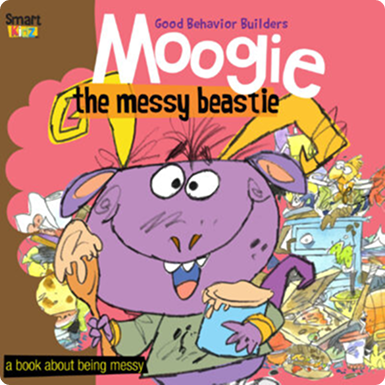
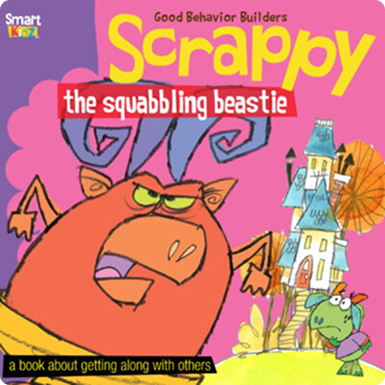
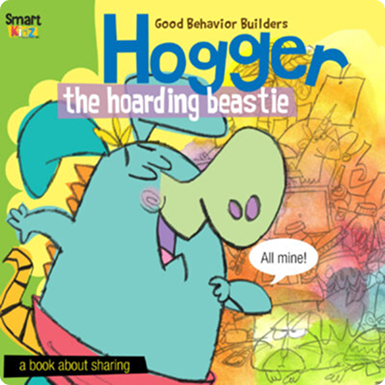
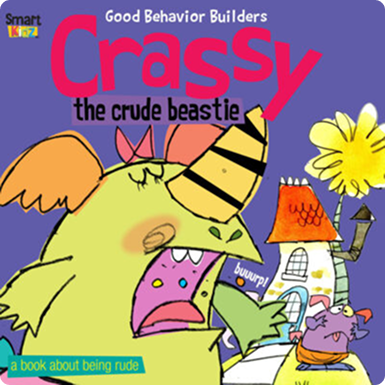
The Good Behavior Builders Program deal with some of the most challenging childhood problems that confront parents. The books in the program give the parent, an effective way to talk to their child about positive values and good behavior in a fun, caring way—rather than with the frustration of constant nagging no parent or child enjoys. Each book features a funny “Little Beasties” character that is involved in a behavioral situation that a child can easily identify with. Once the child understands the results or consequences of bad behavior, they will learn important positive behavioral skills—skills that build character and develop values that last a lifetime.
The Good Behavior Builders Program also give parents a proactive approach to parenting. Each book identifies a specific behavior that they can read and discuss with their child. The books offer methods and techniques that really work in changing bad behaviors into good behaviors. With these interactive books, parents can develop family relationships that are strong, caring and supportive.
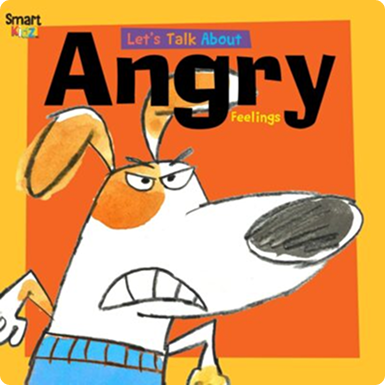
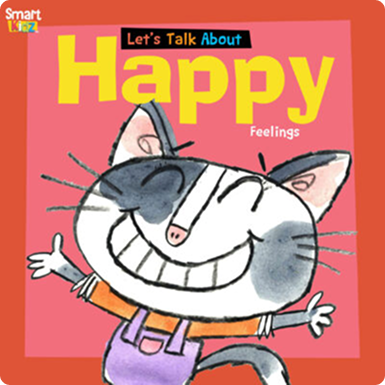
Young children can be overwhelmed by their emotions—often because they don’t understand and can’t express what they are feeling. This, in turn, can frustrate parents. How can parents help their child deal with a problem if the two of them don’t even share a common vocabulary?
The Let’s Talk About Feelings Program is designed to bridge this communication gap. With simple text, lively illustrations, and an interactive format, each book describes familiar situations to help children recognize a particular emotion. It gives them a vocabulary to talk about what they’re feeling, and it offers practical suggestions for dealing with those feelings.
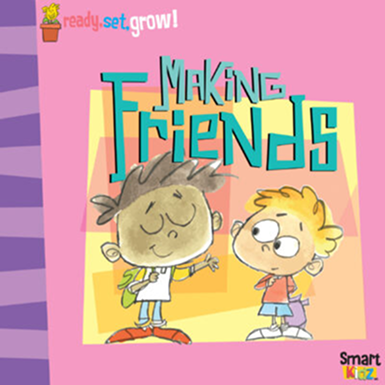
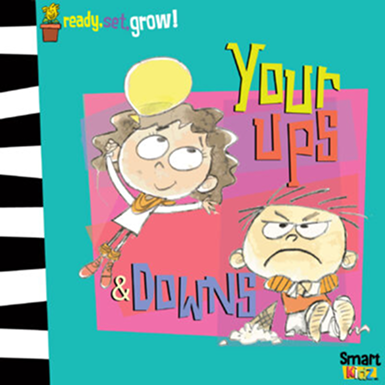
How children relate to other people is crucial to what they are and what they will become. The Ready-Set-Grow Program teaches children the personal skills they need to take care of themselves, the social skills they need to relate to others, and the coping skills they need to deal with day-to-day situations.
The Ready-Set-Grow Program is designed so a child can either read the book themselves or have the parent, read it to them. All the books in this program are interactive and specifically designed to involve a child in the concepts that are being taught. This is done by simply and carefully explaining each concept, illustrating a relatable example of the concept, and then asking questions that encourage a response from the child. By answering the questions, the child will be better able to personalize the concept, integrate into their thoughts, and practice it in their daily lives.
The Smart Kidz Life Skills Library features books in 3 age-graded categories:
Smart kidz media Inc Advocates can order books from the Smart Kidz Bookstore at any time.
The Smart Kidz Life Skills Library is all about giving children physical, hands-on books to read—books that inspire and motivate them to learn and practice valuable life skills in their daily activities.
Each program in this library teaches children vital life skills, encourages reading, and helps them gain an early understanding of the world that surrounds them. Parents are encouraged to reserve a special time each day, select a book, sit down, and read the book together with their child.
The Smart kidz media Inc Initiative believes that parents are the first and most important teacher in a child’s life. And, as the first and most important teacher, parents need to begin equipping their children with basic life skills early on. With the right training and support from Smart kidz media Inc Advocates, parents can build a home library and maintain a life skills learning environment in the home.
The Smart Kidz Life Skills Library’s age-graded books give parents tools to create a home environment where children can learn new living skills while sharpening their reading skills more naturally and confidently. With the Smart Kidz Life Skills Library in the home, parents can feel confident that they are giving their child the best possible start in life!
Smart kidz media Inc Advocates are providers of the free book programs in the Smart Kidz Life Skills Library to the families they serve. While there are no eligibility requirements for parents to receive these free life skills books, they must first be sponsored by a Smart kidz media Inc Advocate. These partners are the only organizations that administer the Adopt a Classroom fundraising programs and then have the right to order the proprietary life skills books at a special discounted (printing cost +) price.
The Immersive Reader digital format presents educational essays that help young learners explore and better understand the world around them.
Similar to the AI-Enhanced Cinematic Storybook format, this proprietary platform combines concise, age appropriate content with engaging narration and visual support.
By transforming essential learning topics into accessible, immersive reading experiences, the platform encourages curiosity, strengthens comprehension, and makes knowledge both meaningful and enjoyable.
Immersive reading combines professional narration with synchronized on-screen text, highlighting each word as it is spoken. This integrated approach helps young readers follow the material with greater ease, improves focus and comprehension, and creates a more engaging way to explore important topics about science, nature, society, and the world around them.
Immersive Reader Essays combine audio narration with synchronized text highlighting, allowing readers to follow along visually while listening. This method improves focus, comprehension, and language learning, making it especially useful for diverse learning styles.
Using AI is a revolutionary technology that can make children’s storybooks more creative, inclusive, and fun. This groundbreaking technology has helped Smart Kidz create stories that kids love and learn from.
Cinematic Storybooks support learning while building morals and living skills into stories. As children read along with the storybook, they also build vocabulary, increase their reading comprehension, and critical thinking skills in a fun way. This helps reading become both enjoyable and educational.
With responsible teacher oversight, Cinematic Storybooks can foster creativity, personalized learning, accessible reading experiences, and a lifelong love of books
AI Cinematic Storybooks enhance reading skills in several ways:
By contrast, many children’s books place entertainment, information, fantasy, humor, or artistic expression ahead of an explicit moral-development goal, although they may still communicate important values.
Smart Kidz stories are distinctive because they combine engaging storytelling with age-appropriate moral reflection without making the lesson feel forced. Their effectiveness depend on strong characters, credible choices, meaningful consequences, and opportunities for children to think rather than simply being told what to believe.
Each Cinematic Storybook includes a Classroom Activity PDF download file composed of:
1. Teacher lessons plans
2. Classroom Discussions Questions
3. What Would You Do Moral Dilemma Scenarios
4. Classroom Activities to reinforce the Moral lessons in the featured Cinematic Storybook
5. A 10 question multiple Choice Quiz
To ensure that the central message of each Cinematic Storybook is clearly understood, SKM has developed a comprehensive packet of questions and activities that teachers can use to reinforce the story’s moral concepts.
The packet also provides a set of “emotion tools” to help educators guide young learners through thoughtful discussions of moral topics. These resources include guided classroom discussion questions and age-appropriate moral dilemma scenarios that invite students to consider how they would respond in challenging situations.
Through structured dialogue, young learners can expand their emotional vocabulary, express their ideas more effectively, and develop a clearer understanding of the moral lessons presented in the featured Cinematic Storybook.
Dialogue helps children learn what it looks like to express feelings appropriately (“I didn’t like that,” “Please stop,” “Can I try again?”), and narration can gently name emotions that a child might sense but not yet identify.
Consider the vast array of knowledge that lies ensconced in books, articles, and digital media. Reading provides access to this treasure trove, empowering individuals to explore worlds beyond their immediate experience. From a practical standpoint, the ability to read allows people to follow instructions, understand contracts, or navigate public transportation systems. From a more profound perspective, reading facilitates access to history, science, art, and philosophy, enabling readers to participate in the great conversations that have shaped and continue to shape humanity.
It is not enough to say that a person can read; what matters is what they read, how they read, and what they do with what they read. The ability to read Shakespeare opens the door to questions of morality, fate, and ambition. Reading scientific literature enables one to grasp the intricacies of the universe and the marvels of the natural world. Through reading, individuals can connect with cultures across continents and centuries, developing empathy and understanding that would otherwise be inaccessible.
The ultimate end of learning to read is not merely to accumulate information, but to develop the ability to think critically, question assumptions, and formulate reasoned responses to the world. Reading is the foundation upon which critical thinking is built. A literate individual can analyze arguments, detect biases, synthesize disparate ideas, and create new understandings.
In this sense, reading becomes an act of agency. It allows individuals to make informed choices not only in their personal lives but also as members of a broader community and society. Newspapers, essays, and even social media posts are subject to scrutiny and interpretation; without the ability to read thoughtfully, one risks becoming a passive consumer of information rather than an active participant in the shaping of one’s environment.
Beyond the acquisition of knowledge and the honing of critical faculties, reading serves as a means of self-discovery and personal growth. Literature, in all its forms, offers mirrors in which readers can see themselves and windows through which they can view others. Through stories, poems, biographies, and essays, readers vicariously experience joys and tragedies, triumphs and setbacks, gaining insight into the complexity of the human condition.
Moreover, the more one reads, the more one becomes capable of expressing themselves. Exposure to varied voices, genres, and styles inspires and equips individuals to articulate their own thoughts, feelings, and experiences. This is the beginning of writing, of speech, of dialogue—skills that flow directly from literacy yet transcend the mere act of decoding text.
If we consider learning to read as an end in itself, we run the risk of narrowing its scope to mere mechanics. This reductionist approach might produce individuals who can read the words but fail to grasp the meaning, intent, or beauty behind them. The phrase “literate but unlearned” comes to mind—those who can process text but do not reflect, question, or grow.
Education systems that focus solely on reading scores or technical proficiency may inadvertently create such outcomes. It is essential, therefore, to cultivate not just the ability to read, but also the motivation, curiosity, and discernment that turn reading into an instrument for lifelong learning.
Reading is also a social act. Shared texts provide common ground for discussion and debate. Communities and societies are built on the exchange of ideas, many of which are transmitted and preserved through written word. The ability to read, then, is foundational to participating in civic life—reading laws, understanding civic duties, and engaging in informed debate.
When reading is seen as a means rather than an end, it is clear that literacy undergirds democracy and social progress. Literate citizens are better equipped to recognize injustice, advocate for themselves and others, and contribute to the collective good.
Not all ends are grand or external. Reading, too, is a wellspring of pleasure and personal enrichment. The experience of becoming lost in a novel, of laughing at a clever turn of phrase, or of shivering at a suspenseful plot twist is its own reward. This joy, however, is made possible only by first learning to read—by gaining the key that unlocks the library of human creativity.
Reading for pleasure can foster a lifelong love of books and stories, fueling curiosity, imagination, and resilience. It teaches us that reading is not a chore, but a privilege and a delight—a tool that enriches our lives in countless, sometimes unexpected, ways.
Given the instrumental and transformative power of reading, educators and parents bear a profound responsibility. Their role is not just to teach children how to read, but to help them see why reading matters. This means encouraging curiosity, providing access to diverse texts, modeling thoughtful reading, and engaging in conversations about what has been read.
When children understand that reading is a pathway—to knowledge, to self-expression, to empathy, to joy—they are more likely to become lifelong learners. The goal should be to cultivate not just readers, but thinkers, creators, and participants in the wider world.
To learn to read is to acquire one of the most powerful tools available to humanity. But the journey does not end with the ability to decode letters and words. Rather, it is just beginning. Reading is the means by which we engage with the world, expand our minds, connect with others, and shape our own destinies. As we teach and learn to read, let us remember: it is not the final destination, but the bridge to a thousand destinations yet unimagined.
Budget constraints can restrict access to reading specialists,
instructional materials, and targeted support for children who need additional help.
Teachers need current, effective curricula and classroom materials that support foundational reading skills and meet a range of learning needs.
Competing responsibilities and limited planning time can make it difficult for teachers to provide consistent, individualized reading instruction.
Large classes, varied reading levels, cultural differences, and language barriers require flexible instruction and appropriate support.
Reading materials must be engaging and age-appropriate to sustain children’s interest amid competing demands on their attention, including digital entertainment and social media.
Parents and caregivers may face constraints in time, resources, or access to guidance that make it difficult to support reading development at home.
Children benefit from encouragement, regular reading routines, accessible materials, and a supportive environment in which to practice.
The practice of giving “free” books is valuable, but children also need structured instruction and ongoing practice. Literacy initiatives should connect access to books with support that helps children learn to read and understand them.
Literacy programs can also provide opportunities to develop personal, social, and coping skills, helping children connect reading with everyday learning and responsible decision-making.