










Barriers to Literacy Development

Key Challenges Affecting Literacy Development

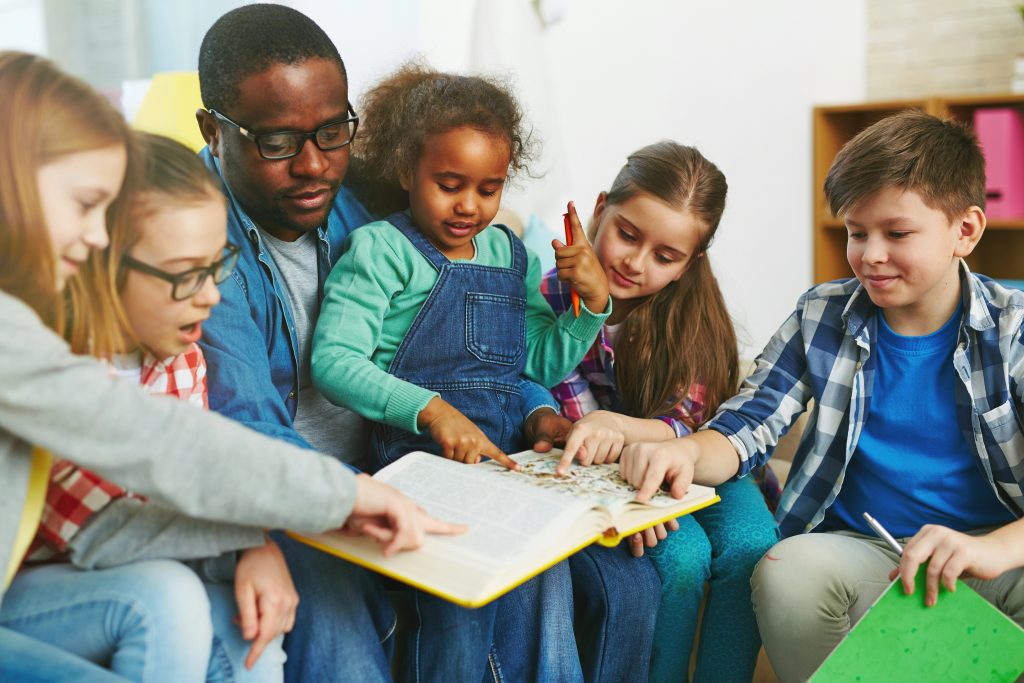
Learning to read requires more than access to books. Children need effective instruction, engaging materials, opportunities to practice, and support at school and at home. When these elements are limited or unavailable, children may struggle to develop the foundational skills needed to read with confidence and understanding. Addressing illiteracy requires a coordinated approach to the following barriers:

Supporting Literacy at Schools and at Home

The Solution: Providing Supporting Literacy Resources to Schools, Libraries and Homes

Smart Kidz Literacy Initiative proposes an integrated approach to literacy development that supports teachers, captivates families, and gives children access to engaging reading resources. By connecting classroom instruction with opportunities to learn and practice at home, this approach aims to reduce resource barriers and help children build reading skills, confidence, and a lasting interest in learning.

Breakthrough Technology: AI Enhanced Videos

Revolutionary Technology: AI Enhanced Videos

Smart Kidz Literacy Initiative just announced a shift toward integrating Artificial Intelligence (AI) in their reading programs. This revolutionary technology will play a key
role in the Smart Kidz Literacy Initiative’s long-term growth strategy.

These revolutionary AI reading platforms are changing the way children’s books and
media are made, presented—and experienced—but in a good way. It will help young
readers immerse themselves in a fully sensory experience—unlocking their imaginations—boosting their curiosity—rousing their emotions and giving them a better understanding of the world around them

Smart Kidz Literacy Initiative’s AI reading resources are filled with fun stories, cool animations, and learning tools that make reading more exciting for kids. The Smart Kidz AI reading platforms help kids learn important values and life skills while they read. Overall, Smart Kidz AI creations make children’s books and media more creative, emotional, inspiring and fun.

Experience the Reading Adventure Island’s Literacy Resources firsthand!

Literacy Is
For Everyone

Foundational
Concept

Learning to
Read Made Easy

Reading with a Purpose

The Reading Adventure Island

Exclusive Delivery Systems

Schools, Libraries, Literacy Advocates Leadership Role

The Necessity of Action and Responsibility in Solving the Worldwide Illiteracy Crisis

When faced with an important crisis, like worldwide illiteracy, simply hoping that someone else will solve it is rarely sufficient. While optimism and hope can be valuable motivators, relying solely on hopeful thinking without taking action can lead to inaction, missed opportunities, and unresolved issues. Here are several reasons why hopeful thinking is not enough when addressing the worldwide illiteracy problem

The Limits of Hopeful Thinking:

Lack of Ownership: By assuming that someone else (e.g. established literacy NPOs and the education system) will handle the problem of illiteracy, concerned individuals and groups avoid taking ownership and responsibility. Important issues, however, often require a collective effort and personal commitment to create meaningful change. Without ownership, the problem of illiteracy will persist or worsen.

Absence of Action: Hope alone does not initiate action. Solutions to the complex challenges of illiteracy typically result from concrete steps, planning, and perseverance. Without action, hope remains wishful thinking rather than a catalyst for change.

Risk of Diffusion of Responsibility: When everyone expects someone else to solve a problem, it often leads to a phenomenon called “diffusion of responsibility,” where no one ends up taking action. This is especially evident in group settings or communities.

Missed Opportunities for Positive Impact: Every person can play a part in addressing illiteracy problems, whether big or small. Waiting for others to act can mean missing the chance to contribute valuable ideas, resources, or actions that could help resolve the issue.

Prolonged or Escalated Problems: The problem of worldwide illiteracy tends to
grow worse when left unaddressed. Delaying action in the hope that someone else will intervene can lead to more difficult, costly, or irreversible consequences.

The Importance of Personal and Collective Responsibility

Addressing the worldwide crisis of illiteracy will require both individual initiative and a
collaborative effort. When schools, libraries and Literacy Advocates partner with the Smart Kidz Literacy Initiative and taking responsibility and acting, they will set an example for others, inspire collective action, and increase the likelihood of finding effective solutions. Hope is powerful when combined with action—it fuels persistence and resilienc —but it cannot replace the need for engagement and responsibility.

The Challenge

While hopeful thinking can provide encouragement during these challenging times, it is not a substitute for action. The importance of solving the problem of illiteracy requires Schools, libraries and Literacy Advocates to step up, take responsibility, and work together toward solutions. By coupling hope with proactive effort, real and lasting change becomes possible

Literacy Is
For Everyone

Foundational
Concept

Learning to
Read Made Easy

Reading Adventure Island

Smart Kids Life Skill Library

Why Hopeful Thinking Is Not Enough

Sample Pre-Reading Smart Cardz

Sample Reading Readiness Smart Cardz

Sample Language Arts Smart Cardz

Sample Math Smart Cardz

Smart Kidz AI Technology

Smart Kidz AI technology is transforming how children’s books and essays are created and experienced. By combining storytelling with interactive visuals and intelligent learning tools, young readers are invited into a rich, multi-sensory world that sparks imagination, deepens curiosity, and makes learning feel natural and exciting. As children read, they don’t just follow a story—they explore ideas, absorb knowledge, and connect more meaningfully with the world around them. With engaging narratives, vibrant illustrations, and built-in educational support, Smart Kidz AI makes reading more creative, inspiring, and genuinely fun.

Sample Smart Kidz Immersive Readers

Sample Smart Kidz Cinematic Storybooks

Igniting a Child’s Imagination

Literacy is the golden key that unlocks the door to endless possibilities. Through it, imagination awakens—sparking wonder, nurturing curiosity, inspiring creativity…and generating innovation—skills that empower children to see the world not just as it is, but as it could be.

View more Learning to Read Samples

Contact Us

Need Help? Let’s Get In Touch

Phone Number

(123)-456-7890

Name and Location of Rotary Club

Email Address

demo@gmail.com

Send Us A Message

Limited School Funding:

Budget constraints can restrict access to reading specialists,
instructional materials, and targeted support for children who need additional help.

Gaps in Instructional Resources:

Teachers need current, effective curricula and classroom materials that support foundational reading skills and meet a range of learning needs.

Heavy Demands on Teachers:

Competing responsibilities and limited planning time can make it difficult for teachers to provide consistent, individualized reading instruction.

Diverse Classroom Learning Needs:

Large classes, varied reading levels, cultural differences, and language barriers require flexible instruction and appropriate support.

Limited Student Engagement:

Reading materials must be engaging and age-appropriate to sustain children’s interest amid competing demands on their attention, including digital entertainment and social media.

Barriers to Family Participation:

Parents and caregivers may face constraints in time, resources, or access to guidance that make it difficult to support reading development at home.

Limited Home Learning Support:

Children benefit from encouragement, regular reading routines, accessible materials, and a supportive environment in which to practice.

Gaps Between Book Access and Reading Instruction:

The practice of giving “free” books is valuable, but children also need structured instruction and ongoing practice. Literacy initiatives should connect access to books with support that helps children learn to read and understand them.

Limited Integration of Life Skills:

Literacy programs can also provide opportunities to develop personal, social, and coping skills, helping children connect reading with everyday learning and responsible decision-making.

Expand Access to Free Educational Technology

Provide schools with free digital learning resources that complement reading instruction and extend opportunities for practice beyond the classroom. The goal is to reduce financial barriers to educational content, particularly in underserved communities.

Support Teachers with Free Curricula and Lesson Plans

Offer teachers free curricula and ready-to-use lesson plans to support reading development. These resources are intended to reduce preparation demands and help teachers incorporate engaging learning activities into classroom instruction

Engage Parents and Caregivers as Learning Partners

Include families in the educational process by providing resources and practical guidance for supporting children’s reading. Encourage shared reading, conversation, and regular practice that reinforces classroom learning and strengthens parent-child connections.

Strengthening the Home Learning Environment

Help families establish supportive learning routines through accessible materials, encouragement, and guidance. The aim is to make reading and learning a consistent part of everyday home life.

Make Learning Engaging and Meaningful

Provide age-appropriate books and multimedia resources that capture children’s interest and encourage active participation.
Connect reading with stories and life skills to make learning enjoyable, relevant, and worth returning to.

Immersive Reader Essays-Learning About Our World (Ages 8 – 14)

The Immersive Reader digital format presents educational essays that help young learners explore and better understand the world around them.

Similar to the AI-Enhanced Cinematic Storybook format, this proprietary platform combines concise, age appropriate content with engaging narration and visual support.

By transforming essential learning topics into accessible, immersive reading experiences, the platform encourages curiosity, strengthens comprehension, and makes knowledge both meaningful and enjoyable.

Immersive reading combines professional narration with synchronized on-screen text, highlighting each word as it is spoken. This integrated approach helps young readers follow the material with greater ease, improves focus and comprehension, and creates a more engaging way to explore important topics about science, nature, society, and the world around them.

Immersive Reader Essays combine audio narration with synchronized text highlighting, allowing readers to follow along visually while listening. This method improves focus, comprehension, and language learning, making it especially useful for diverse learning styles.

AI Cinematic Storybooks & Moral Lessons (Ages 8 – 14)

Using AI is a revolutionary technology that can make children’s storybooks more creative, inclusive, and fun. This groundbreaking technology has helped Smart Kidz create stories that kids love and learn from.

Cinematic Storybooks support learning while building morals and living skills into stories. As children read along with the storybook, they also build vocabulary, increase their reading comprehension, and critical thinking skills in a fun way. This helps reading become both enjoyable and educational.

With responsible teacher oversight, Cinematic Storybooks can foster creativity, personalized learning, accessible reading experiences, and a lifelong love of books

AI Cinematic Storybooks enhance reading skills in several ways:

  • Intentional character education: Each story is built around a particular value or social skill rather than treating the lesson as incidental. Illustrative example: A story about returning a lost wallet could focus on honesty even when no adult is watching.
  • Original, child-centered situations: New characters and plots place moral choices in settings children recognize, such as home, school, sports, or friendship groups. Illustrative example: A student must decide whether to include a new classmate in a group activity.
  • Choices and consequences: The plot often shows how a child’s decisions affect other people, relationships, and the child’s own feelings. Illustrative example: A character who spreads a rumor sees the harm it causes and works to repair trust.
  • Reflection rather than simple obedience: Effective moral development stories invite children to consider why a choice is fair, kind, responsible, or courageous. Illustrative example: A child weighs loyalty to a friend against the need to tell an adult about unsafe behavior.
  • Emotional literacy and empathy: Stories name emotions and encourage readers to understand viewpoints different from their own. Illustrative example: A child who feels jealous learns to recognize that feeling and celebrate a sibling’s success.
  • Growth through mistakes: Characters make poor choices, accept responsibility, and improve rather than being divided into purely “good” and “bad” people. Illustrative example: After cheating in a game, a character apologizes, accepts the consequence, and chooses to play fairly.
  • Discussion-friendly structure: The stories support questions before, during, or after reading so adults and children can discuss motives, alternatives, and outcomes. Illustrative example: Readers might be asked what else a character could have done during a conflict.
  • Practical application: A story’s lesson connect directly to actions children can practice in everyday life. Illustrative example: A story about gratitude could lead readers to thank someone who helped them.
  • Flexible cultural representation: Original stories intentionally include varied families, communities, abilities, and experiences while exploring values shared across many backgrounds. Illustrative example: Children with different traditions cooperate on a neighborhood service project.


By contrast, many children’s books place entertainment, information, fantasy, humor, or artistic expression ahead of an explicit moral-development goal, although they may still communicate important values.

Smart Kidz stories are distinctive because they combine engaging storytelling with age-appropriate moral reflection without making the lesson feel forced. Their effectiveness depend on strong characters, credible choices, meaningful consequences, and opportunities for children to think rather than simply being told what to believe.

Classroom Activity Downloads

Each Cinematic Storybook includes a Classroom Activity PDF download file composed of:
1. Teacher lessons plans
2. Classroom Discussions Questions
3. What Would You Do Moral Dilemma Scenarios
4. Classroom Activities to reinforce the Moral lessons in the featured Cinematic Storybook
5. A 10 question multiple Choice Quiz

To ensure that the central message of each Cinematic Storybook is clearly understood, SKM has developed a comprehensive packet of questions and activities that teachers can use to reinforce the story’s moral concepts.

The packet also provides a set of “emotion tools” to help educators guide young learners through thoughtful discussions of moral topics. These resources include guided classroom discussion questions and age-appropriate moral dilemma scenarios that invite students to consider how they would respond in challenging situations.

Through structured dialogue, young learners can expand their emotional vocabulary, express their ideas more effectively, and develop a clearer understanding of the moral lessons presented in the featured Cinematic Storybook.

Dialogue helps children learn what it looks like to express feelings appropriately (“I didn’t like that,” “Please stop,” “Can I try again?”), and narration can gently name emotions that a child might sense but not yet identify.

Reading as a Gateway to Knowledge

Consider the vast array of knowledge that lies ensconced in books, articles, and digital media. Reading provides access to this treasure trove, empowering individuals to explore worlds beyond their immediate experience. From a practical standpoint, the ability to read allows people to follow instructions, understand contracts, or navigate public transportation systems. From a more profound perspective, reading facilitates access to history, science, art, and philosophy, enabling readers to participate in the great conversations that have shaped and continue to shape humanity.

It is not enough to say that a person can read; what matters is what they read, how they read, and what they do with what they read. The ability to read Shakespeare opens the door to questions of morality, fate, and ambition. Reading scientific literature enables one to grasp the intricacies of the universe and the marvels of the natural world. Through reading, individuals can connect with cultures across continents and centuries, developing empathy and understanding that would otherwise be inaccessible.

Reading to Think Critically and Act Purposefully

The ultimate end of learning to read is not merely to accumulate information, but to develop the ability to think critically, question assumptions, and formulate reasoned responses to the world. Reading is the foundation upon which critical thinking is built. A literate individual can analyze arguments, detect biases, synthesize disparate ideas, and create new understandings.

In this sense, reading becomes an act of agency. It allows individuals to make informed choices not only in their personal lives but also as members of a broader community and society. Newspapers, essays, and even social media posts are subject to scrutiny and interpretation; without the ability to read thoughtfully, one risks becoming a passive consumer of information rather than an active participant in the shaping of one’s environment.

Literacy as a Path to Self-Discovery and Expression

Beyond the acquisition of knowledge and the honing of critical faculties, reading serves as a means of self-discovery and personal growth. Literature, in all its forms, offers mirrors in which readers can see themselves and windows through which they can view others. Through stories, poems, biographies, and essays, readers vicariously experience joys and tragedies, triumphs and setbacks, gaining insight into the complexity of the human condition.

Moreover, the more one reads, the more one becomes capable of expressing themselves. Exposure to varied voices, genres, and styles inspires and equips individuals to articulate their own thoughts, feelings, and experiences. This is the beginning of writing, of speech, of dialogue—skills that flow directly from literacy yet transcend the mere act of decoding text.

The Risk of Reducing Reading to a Skill

If we consider learning to read as an end in itself, we run the risk of narrowing its scope to mere mechanics. This reductionist approach might produce individuals who can read the words but fail to grasp the meaning, intent, or beauty behind them. The phrase “literate but unlearned” comes to mind—those who can process text but do not reflect, question, or grow.

Education systems that focus solely on reading scores or technical proficiency may inadvertently create such outcomes. It is essential, therefore, to cultivate not just the ability to read, but also the motivation, curiosity, and discernment that turn reading into an instrument for lifelong learning.

The Social and Civic Dimensions of Reading

Reading is also a social act. Shared texts provide common ground for discussion and debate. Communities and societies are built on the exchange of ideas, many of which are transmitted and preserved through written word. The ability to read, then, is foundational to participating in civic life—reading laws, understanding civic duties, and engaging in informed debate.

When reading is seen as a means rather than an end, it is clear that literacy undergirds democracy and social progress. Literate citizens are better equipped to recognize injustice, advocate for themselves and others, and contribute to the collective good.

Reading for Pleasure and Enrichment

Not all ends are grand or external. Reading, too, is a wellspring of pleasure and personal enrichment. The experience of becoming lost in a novel, of laughing at a clever turn of phrase, or of shivering at a suspenseful plot twist is its own reward. This joy, however, is made possible only by first learning to read—by gaining the key that unlocks the library of human creativity.

Reading for pleasure can foster a lifelong love of books and stories, fueling curiosity, imagination, and resilience. It teaches us that reading is not a chore, but a privilege and a delight—a tool that enriches our lives in countless, sometimes unexpected, ways.

The Responsibility of Educators and Parents

Given the instrumental and transformative power of reading, educators and parents bear a profound responsibility. Their role is not just to teach children how to read, but to help them see why reading matters. This means encouraging curiosity, providing access to diverse texts, modeling thoughtful reading, and engaging in conversations about what has been read. 

When children understand that reading is a pathway—to knowledge, to self-expression, to empathy, to joy—they are more likely to become lifelong learners. The goal should be to cultivate not just readers, but thinkers, creators, and participants in the wider world.

Conclusion: Toward a Broader Vision of Literacy

To learn to read is to acquire one of the most powerful tools available to humanity. But the journey does not end with the ability to decode letters and words. Rather, it is just beginning. Reading is the means by which we engage with the world, expand our minds, connect with others, and shape our own destinies. As we teach and learn to read, let us remember: it is not the final destination, but the bridge to a thousand destinations yet unimagined.